Categories
Home Renovations

How to Frame a Basement Wall?

Framing your basement walls is the first step in finishing your basement. Get ready, because this is when all of your time spent researching, planning, and designing your basement will finally pay off. First, decide on the type of frame that you got to be installed on the wall.

Materials Required for Basement Framing

  • Foam Board
  • Foam Board Glue
  • Drills and Drill Bits
  • Hammer and Nails
  • Saw (For Cutting)
  • Drywall Screws
  • Safety Goggles

Step by Step Process to Frame a Basement Wall

1. Exterior Wall Set-Up :

Prepare the exterior wall before installing the frames to them. Before attaching the foams, check for any damages to the walls and repair them if necessary. Make markings on the wall for studs and make sure to make the same marking on the foam boards as well. Foam Boards are used to keep the basement energy efficient. Drill holes through the foam board to the exterior walls and hammer in the screws through each hole.

2. Prepare the Frame :

Start assembling the wall frame on the floor and it’s faster and easier to construct a wall on the ground. Make markings on the frame, where the studs are to be installed. Have all the markings face the same direction, so its easy to nail them and avoid a curved wall. It’s comfortable to construct your frame with the crowns up; that way both ends of the studdings are solidly on the ground when you attach the top and bottom plates. Be careful in building the frame so that it can tip up quickly without getting stuck in the room edges.

3. Tip the walls :

It’s usually comfortable to tip a wall up with the bottom plate against the wall, but if the floor joists are sagging or there are pipes, you may have to raise the top of the wall in first and push the bottom plate into place.

4. Fasten the bottom frame first :

After tipping up the structure to the wall, time to fasten the frame to the wall. You can use construction adhesive and nails to secure the bottom frame to the wall. Wear safety glasses and gloves for protection. You can use drilling machine to make holes and nail down the screws and fasten the frame.

5. Fasten the Top of the frame to the wall :

Nail the top frame to every joist present and use plumbing tools to secure the nails on to the structure. It’s not essential to adjust the studs straight under floor joists, but it’s a good idea if you plan to run ductwork or pipes in the walls.

6. Inside Corners :

When there are inside corners, turn the last board on the first wall sideways and overlap it about halfway pass the connecting wall. By making in this way, you can fasten the two walls together.

Conclusion

You require patience and well planning for framing a basement wall. If you want a professional to take off the hassle on you? Contact Executive Touch Painters in Toronto for expert basement renovations. Call us at 416-410-0164 and get a Free Estimate on the cost to frame a basement wall.


Categories
Home Renovations

How To Install Baseboard?

Baseboard molding on the walls of your house give a final appearance and also add beauty to the home. Baseboard moldings are the final trims to be done in the rooms and are meant to fill gaps between the wallboard and floors. The moldings also form a pleasingly cohesive perimeter. The moldings are added after the painting to the room is completed.

Choosing a Baseboard Style :

Always choose a board style that is complimenting to the room and should also mix well with the existing mill work of the room. There are a variety of board styles available, and you can choose from the best possible design.

Installing Baseboard

Materials Required for Installation :

Many materials are required to install a baseboard in your room. Some of them are mentioned here,

  • Baseboard Molding
  • Cap Molding
  • Measuring tape
  • Miter and Circular Saw
  • Stud Finder
  • Pencil and Level
  • Carpenters glue and Construction Adhesive
  • Nails and Nailgun
  • Hammer
  • Compass
1. Measuring and Cutting of the Molding :
  • Be careful while cutting the molds. The cutting should be done as per the measurements. Always cut few inches extra for the molds that meet outside the walls.
  • Make numbering on the molds, so it’s easy for installation.
  • Make sure that the floor is completely leveled, check once with the level.
2. Begin the Installation:
  • Start the installation at a convenient location.
  • Hammer two finishing nails through the board at each stud, near the top and bottom of the baseboard.
  • If needed added splices, when the length of the wall is more than the moldings.
  • See that the joint is not on the stud, where nails are nailed.
3. Miter Corners
  • To miter, the outside corners, fit the coped end of the molding first and then mark the joint location with the piece in place.
  • Keep in mind that corners are not always square. You may need to adjust joint angles slightly for a good fit.
4. Add Shoe Molding
  • To complete the work add shoe molding.
  • Place the shoe molding on the bottom of the molding and nail it to the baseboard.
  • To have a more traditional look, you can add cap molding at the top of the frame.
5. Review the work completed
  • After nailing the molding to the wall, leave it for some time and come back to check the work completed.
  • Use sandpaper to remove extra adhesive. Remove the sharp edges by using sandpaper.
  • Apply putty on the nail holes and let dry for some time
  • Add another coat of paint or putty if needed
  • After the putty is dried up, use the sandpaper to remove the extra putty and make it smooth.

Now that you have completed baseboard molding, it’s time to apply primer and paint to the molding.

Conclusion

For Painting services for your home Contact our Professional Painters at Executive Touch to get started or Call (416) 410-0164 to get a Free Estimate.

Categories
Home Renovations

How to Repair Stucco?

Stucco repair is the most used technique for repairing the damaged walls and ceilings. Traditional Stucco is prepared from sand, water, and lime. But in modern days it’s made from Cement, sand, and water. Stucco repairing technique is effortless for the homemakers, and you can also apply the texture to the stucco applied. Some stucco materials are water resistant, choose the best one suitable for your home.

Step by Step Process to Repair Exterior Stucco Walls or Ceilings

Step 1: Break the Loose Stucco

Using a hammer break up the loose stucco that is hanging on the walls and be careful not to damage the underlying wooden supports.

Step 2: Chip off the Edges

Continue the above step until you have found the stucco firmly adhered to the wooden support. Remove the wire mesh that is present.

Step 3: Cover the Exposed Lath

Trim the piece of builder’s paper with a utility knife tightly right at the point where the wood lath meets the old stucco. Fasten the paper further using some roofing nails then add the second layer on the top of the first.

Step 4: Add the mesh

Place galvanized metal lath over the paper and trimmed it tight against the edge of the concrete. Snips with offset handles will make this job easier. Drive more roofing nails through the mesh and into the wood lath.

Step 5: Mix up the ingredients and Prepare the Stucco

Wet the existing stucco so that it does not suck the moisture from the newly added one. Apply the stucco on the mesh attached to the old one. Smooth the stucco mix with a finishing trowel, then pack it against the edge of the old stucco with a brick trowel. Keep adding more material until this layer is about 1/2 inch below the existing stucco surface. Make scratches to improve the bond with the second coating. Cover the area coated with a plastic sheet and plaster it to stucco from drying out.

Step 6: Apply the Second Coat

Wait for seven days after completing the first coating. Remove the plastic and drizzle the patch with water. Mix stucco according to the second-coat recipe on the packet, and blade on a 3/8-inch-thick coat, working from the bottom up. Cover again with the plastic sheet.

Step 7: Finish it up with a Final Coat

After about three days remove the plastic cover, mix up the stucco and make a finishing coat that is matching with the remaining wall or ceiling.

Step 8: Wait to Paint the Area

Let the stucco patch prepared to be cured for a week before painting it. Make sure the painting is done carefully so that the spot is not visible.

Conclusion

So when are you thinking of repairing patches on wall or ceiling think of Stucco Repair? Patching of holes and repairing cracks can be a difficult task, so you need a professional Stucco Contractor in Toronto to get your job done right. We at Executive Touch Painters offer expert stucco repair service at affordable costs. Contact or Call us at (416) 410-0164 for a Free Quote or to clear your doubts.

Categories
Exterior Painting

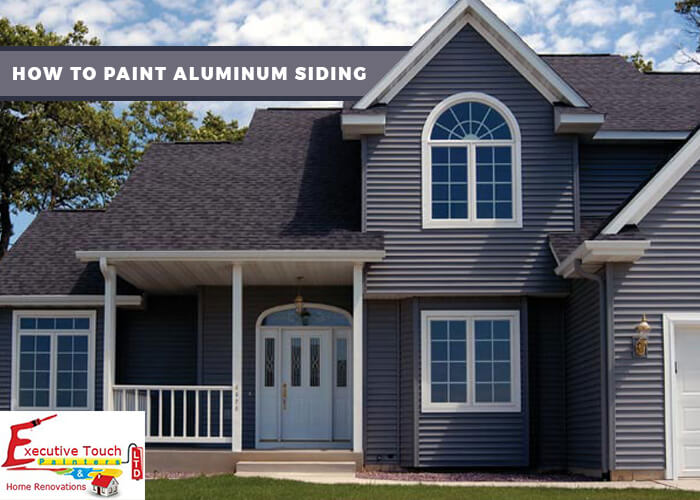
How To Paint Aluminum Siding?

Many homeowners in Toronto tend to remove the old aluminum sidings. Instead of replacing the old aluminum siding, it is more cost-efficient to repaint it. It is a simple process that can be completed in less time than you think. Often the question arises on how to paint the old Aluminium siding? In this article, we discuss the process in simple steps.

Steps to be Followed in Painting Aluminium Siding

Step 1: Repair the Damages

Repair all the damages that are present on the siding. Any sagging and separation, especially where the roof meets the wall, should also be inspected.

Step 2: Clean the Surface

Use sandpaper to scrub the surface of the siding. After using the sandpaper use a pressure or power washer to clean up the surface.

Step 3: Fill the Gaps or Holes with Caulk

Siding with holes will not be beautiful after painting. So be sure to fill all the gaps on the siding surface. Caulking is the best process to fill up the holes. Use a caulking solution to fill up the holes and cracks in the siding.

Step 4: Apply the Primer

Before going to the actual painting, first, apply the primer. The primer must be well paired with the paint that you are going to use on the siding. Always use two coats for that extra protection of the siding. Avoid using latex primer as it reacts with aluminum siding and fails to stick to the paint applied afterward.

Step 5: Apply the Paint

Depending on the paint you chose, the number of coatings can be changed. But always be sure that you have a minimum of two coats applied. Depending on the surface and your convenience you can use rollers or brushes. Spraying is also another technique used, but be sure that the climate is not too windy when using the sprayers for painting.

Step 6: Keep an Eye on the Climate

Do not go for painting if it’s too hot or raining. Always give a gap of one day after applying the primer to the siding. Give time for the primer to stick well to the surface.

Conclusion

Painting an Aluminum siding is more complicated than the painting surfaces of the wall and other surfaces, there are many real-world scenarios in Canada where homeowners attempted the job and tend to fail which leads to the loss of hard-earned money and valuable time. So, it is a wise decision to hire a professional to paint your exterior aluminum sidings rather than doing it yourself or removing the sidings to save you thousands of dollars. Contact Executive Touch Painters to get started or Call us at (416) 410-0164 for a Free Estimate today!

Categories
Interior Painting Painting Ideas

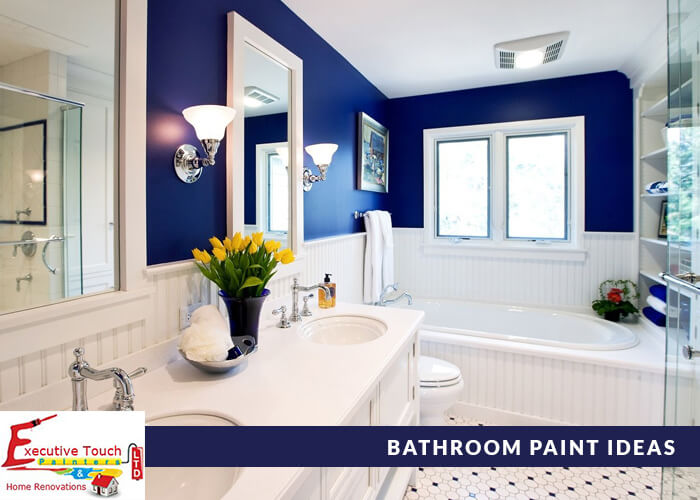
Bathroom Paint Ideas

When it comes to decorating a house, all the rooms get equal attention and the rooms are well furnished, but the bathrooms are neglected and frequently forgotten and completed with half-hearted designs. But why? We spend time in the bathrooms and yet the decoration of the bathroom is ignored. All you need to transform the space is a pop of color on the walls.

The bathroom is the place where you get ready to face the world, and it’s also a private place to get recharged. Check these painting ideas for your bathroom. Choose the right color and paint to avoid bathroom paint peeling, cracking or bubbling.

Choosing The Right Colors

Opt for Light Colors

The colors should not alter the light in the bathroom, which might affect your grooming. Strong colors have the most impact, so always go for light creamy colors.

Soothing colors

A master bathroom is a place which lets you seize yourself for some time. Choose soothing paint colors that ease you to relive your stress, anxiety, frustration or more. Master bathroom paint color ideas should be according to the bedroom colors. Choose colors that share either cold or warm undertones of the bedroom.

Vibrant Colors for Small Bathrooms

If the Small bathroom doesn’t have natural light, vibrant color can play with artificial lighting sources to make a strong style statement.

White Color adds Softness

Bathrooms are full of mirrors, tiles and other hard surface materials. So the color should bring a sense of softness to space. White and neutral colors bring a touch of softness to the bathrooms when complementing them with hues.

Some Unique Small Bathroom Paint Ideas

If you want to decorate your powder room a bit different from others? Try these ten vivid colors for your small bathroom painting in Toronto.

Vibrant Teal :

A bright shade of teal color gives a quite strong statement in this modern world of designing. Choose a vibrant color for the walls and if possible pop out fixtures and artworks on the walls.

Black :

Bring a modern look to your bathroom by combining Black with silver accents. Consider adding a silver mosaic tile as the background to make the space shine.

Glimmering Copper :

Metallics are a definite style statement nowadays. So why not incorporate them into the bathrooms also. With glimmering copper, you can add instant elegance to your bathroom. Use mosaic tiles with the color combination of brown and neutral color for the backsplash. Using a floating marble countertop will complement the look of the mosaic tiles.

The Magenta’s :

Try a girly side with a pop of pink. A graphic accent not only adds fun pattern into the design but helps counteract the brightly painted walls.

Powder Blue :

If not interested in vibrant colors, go for light colors like powder blue. Try light blue color in the baby bathroom. A sunny shade of yellow sets perfectly with the space to enhance it further.

Pretty Plum :

Dark purple color adds womanishness and gives a bold look to the bathroom. Don’t be afraid to use different combinations of colors to get a bold look.

Neon Yellow :

Bright yellow stripes give a young vibe to a small bathroom also. Use minimal fixtures and accessories when using yellow lines in the bathroom space.

Deep Cherry Red :

Energize the children bathroom with a deep cherry shade of red and is also an excellent color choice for the kids. Decorate the space above the toilet by creating a colorful gallery wall showcasing the artwork of your child.

Serene Green :

On the lighter side, use the light green shade in the bathroom. Green color when combined with all fixtures in white color, gives a peaceful and rejuvenating space to freshen up.

Orange:

Orange color adds warmth and comfort to the space of the bathroom.

Conclusion

If you are considering to paint your bathroom with the above colors, Contact or Call our Professionals at Executive Touch Painters on (416) 410-0164 to get a Free Estimate. If you are looking for more bathroom paint ideas, Get in touch with our experts for a Free Color Consultation.

Categories
Interior Painting

Painting Tips to Make your Condo Look Bigger

Are you having a small space in your condominium but want to make it look substantial? Then change the way you paint your home. Follow these painting tips to make your Toronto Condo look bigger.

Useful Tips in Condo Painting

Paint with White Color :

Chances are there that space looks little bigger when space is painted in white color. Do not go for darker colors. Try to use white or neutral colors. A designer says that if you want to make space look bigger use white or light neutral colors.

Use the Same Light Colors for Painting the Walls and Trims :

Paint the boards, moldings, doors, window trimmings and inside shutters with the same color as of the wall. By giving the same light color, you don’t see boundaries, and you can feel that space has increased a bit. Try to use white or light colors. If you use too much of only one color, including the furniture, then it can look dull or cold. So always have touches of color in your furnishings.

Use Trendy Painting Palettes :

White is not the only color that makes your condo spacious. Use trendy palettes for places that have natural light coming in. Also painting these rooms with grey color make the room look roomy and bright. Try different splashes of paint to create new designs. Pale blue-green color is another way to generate an illusion of space. An added benefit is the natural color, which makes the room look bigger and bright.

Be Monochromatic: The white baseboard and cream walls go very well with the white cabinets and curtains, added with a light wooden table makes your space look fresh and inviting.

Shape your Room with Bright and Lighter Color Combinations :

If you have narrow space, as the Toronto condo painters do, you can paint the shorter side a little brighter than, the longer side. This ‘widens’ the shape of the room, so it becomes less rectangular. Why is that? It is because lighter colors recede, while darker colors advance, seemingly moving that shorter surface closer to you.

Paint Stripes to Create Height or Width :

Whichever way you’d like your room to expand, either vertically or horizontally, strips are your friends so paint them on your walls. Besides, they add visual interest.

Paint the Adjacent Rooms with the Same Color :

Paint the adjoining places with the same color so that your eye is lead easily from one room to another. If you do not want the same color, then use different shades of the same color.

Color Ideas to Paint different Rooms in a Condo

The Living Room :

The deep and warm reddish color is suitable for light wood furniture. There are many living room paint ideas to showcase your house beautifully.

The Bedroom :

Use cool and earthy colors for complimenting the warm tones of the furniture present in the bedroom.

The Kitchen :

The bright green color blends well with the kitchen appliances. By using dark colors, there is no need to be afraid of using deep or bold colors even in small spaces.

The Dining Room :

Use colors that blend well with the furniture present in the dining room. Use natural colors through the interiors of the dining room and create a cohesion between the colors and the adjacent spaces.

Conclusion

Considering to improve your room space in your condominium with the above paint colors which will add more space to your condo in Toronto for sure. If you feel you need more color ideas, or if you want to get started with your condo painting by hiring professional Toronto condo painters, Contact or call Executive Touch Painters at 416-410-0164 to get a Free color consultation or an Estimate to match your requirements.

Categories
Interior Painting

How to Paint a Brick Fireplace?

Despite proper maintenance of brick Masonry fireplaces, a fair amount of soot, mildew, and efflorescence get accumulated on the furnaces and damages the paint on the blocks in the place. Brick has a unique texture, that is to be taken into consideration while painting the surfaces of the fireplaces. Follow these simple steps to paint up your fireplace bricks.

Materials Required for Painting the Fireplace :

  • Water
  • Soap
  • Stiff bristle brush
  • Painters Tape
  • Drop Cloth
  • Paint Roller
  • Bleach for cleaning
  • Paint Brush
  • Acrylic latex paint color
  • Primer

Steps to Paint a Brick Fireplace:

Step 1: Clean the Surface

The bricks in the fireplace tend to accumulate dirt and grit. So to remove them clean the brick with soapy water using a stiff bristle brush. Use the scrub brush to remove white powdery mineral deposits on the surfaces. If the fireplace also has soot, wash the brick with bleach and water. After cleaning allow it to dry down for 24 hours before painting.

Step 2: Check for Cracks

Before painting check for any cracks present on the surface of the bricks. If any breaks are there, fill them with some acrylic caulk. Read on the instructions given on the caulk bottle and provide the required time for the caulk to dry.

Step 3: Apply the Primer

Before going to paint, you have to apply the primer on to the surface of the bricks. Cover the areas that you wish not to paint with cloth and also protect the flooring from the paint splatter by covering with a cloth. Pour the primer into a bucket and by using a roller apply the primer on the surface of the brick. Make sure that you apply primer to all the bricks evenly. For joints and edges, use a brush to apply the primer. Where ever you have cleaned the efflorescence, apply two coats of primer for extra protection. If necessary apply two coats of primer. Allow the primer to dry completely overnight.

Step 4: Paint the Fireplace

After the primer is dried for overnight, it’s time to paint the fireplace. The fireplace paint should be heat resistant. Use the Stiff bristle brush to paint between the crevices of the mortar and brick. After that dip the roller into the bucket and apply paint to the remaining areas evenly. Gently apply a top coat of the paint to the brick block using overlaying strokes to cover all the bricks as best as possible, and leave it all to dry.

Step 5: Perform Final Touch-Ups

After the paint has dried up, look if there are any patches present. Fill up the spots with paint and allow it to dry. Take off the protection cloth on the floor and clean up any paint splatters with warm water. Clean the paint splatters as soon as possible. Clean the brushes for future use.

If you wish to add more decoration to the fireplace, then you can use Mantel for decorating around the painted brick fireplace. Use the mantel to give details and add molding to the mantel with wooden screws. Sand the mantel and paint it. Find the studs in the wall and nail the screws into the mantel through the wall.

Conclusion

Painted brick fireplace looks very neat and attractive and will also add potential to your home. So Bricks in the fireplace should be cleaned and painted from time to time. If you need a professional for painting your fireplace other than DIY, contact our Professionals at Executive Touch Painters on (416) 410-0164 to get a Free Estimate.