Categories
Exterior Painting

Reasons Why Spring is the Best Season to Paint Your Toronto Home

The long winter season has come to an end, and it is the time to put together all the to-do list for your home interior and exterior. Typical spring season starts with cleaning of the yard. In this season, the most overlooked area is the exterior walls. The paint might have faded or peeled off and needs a new coating. There is a wide range of benefits when you paint your exterior in the spring season.

Why Spring is the Perfect Time to Paint Your Home?

1. The Exterior Takes a Heavy Thrashing in the Winter Season

The harsh climate of the winter can cause severe damage to the exterior of your home. Most of the people ignore the wear and tear caused by the fog, rain, temperature changes, and sunshine. The harsh weather damages the exterior paint and finds its way into the exterior and damages the trim pieces. Eventually, all the changes make the paint to crack, peel off, and to flake. Even after withstanding the cold temperatures, the coming summer can cause more damage by having pressure on the paint.

2. You Can Find out Many Repairs and Damages

One of the great things in painting job is that you can find out the condition of your exterior. When your painter is going to paint a particular area, there is a chance that the damages or repairs can be found. As you have decided to paint the exterior, you can make it a point to clear all the damages and repairs and finish the painting. Additionally, the peeled off paint can also be removed, and a fresh coat of paint can be applied.

3. Improve the Curb Appeal

When you are looking to purchase a house, the first thing you observe is the exterior walls and painting. The right look of the exterior adds extra beauty to the home, and your guests are surely impressed. A potential buyer drives around to observe the surfaces. If the exteriors appear good, then there is a chance that they will have a look in the interiors.

Many things help in improving the curb appeal of your house. Exterior painting colors add an appeal to the home. Neutral colors like the grey, white, blue and brown, bold colors like red and blue are welcomed for the exteriors of any house.

4. Increases the Value of Home

Painting your home exteriors is a type of investment. You need to invest a low amount of money on the paint. The typical cost of painting your house with the help of a professional is very low when compared to the value of the home increased.

5. Convenience of Time

The warm and bright sunshine in the spring helps the paint to bond well with the walls. Additionally painting your home in the spring season is just part of maintenance that you should conduct every year. Spring is the time for all people to come out and work in their yard and make the home fresher and clean. So as a part of maintenance, spring is the best time for painting your exteriors

6. You Get the Best Price

After long waiting in the cold winter, the painters and companies are getting ready for work. There is usually a competition between them to grab works. So the customers get the chance to get the lowest prices for the exterior painting works.

Conclusion

Spring is one of the best seasons to paint your Toronto home. Are you thinking of repainting your house? Our professionals at Executive Touch Painters and Home Renovations are ready to paint your home with a free color consultation. Contact or Call us at 416-410-0164 for a free spring estimate.

Categories
Exterior Painting

Can Galvanised Steel Be Painted?

Yes, Galvanized steel can be painted. Steel is used for many purposes and is also the most corrosive element. Galvanizing is a metallurgical process which applies zinc metal layer over the steel surface to avoid corrosion. During the process, the zinc layer is used for protecting the underlying substrate.

Determine the Condition of the Coating Before Painting :

The galvanized steel is subjected to harsh climatic conditions, so the zinc components form different organic compounds on the surface. So depending on the state of galvanization, the painting should be done. The galvanized conditions can be New, Partially and Fully Weathered.

1. Newly Galvanized :

This is the steel surface which has been exposed to the atmosphere for just 48 hours, and there are few zinc compounds present on the surface. The surface is shinning, and so the painting process is simple.

2. Partially Weathered :

Here the surface is exposed to the environment for two days to up to 1 year. There are little more zinc compounds present on the surface and are firmly adhered to the surface. These compounds are complicated to clean and so the painting is a bit difficult.

3. Fully Weathered :

Here the surface is exposed to the climate for more than one year. There are relatively more zinc compounds present on the surface. Most common is zinc carbonate that tightly adheres to the surface and does not get washed away when cleaned with water. The zinc compounds are not water soluble. But the zinc compounds should not be removed from the surface as the paint that is painted on the surface forms a strong bond with the zinc compounds.

Materials Required for Painting the Surface of Galvanized Steel :

  • Metal Primer
  • Acrylic Paint
  • Painting Tools
  • Scrub Brush
  • Sandpaper for cleaning
  • Cleaning Agent

Process For Painting Galvanized Steel :

1. Cleaning And Repairing The Surface

The surface of the sheet should be clean before painting, sanded with sandpaper, and the dirt is to be removed. After the sanding is completed, wash the surface with the cleaning agent. If there are rusting spots present on the surface, then remove them with the help of sandpaper.

2. Applying The Primer:

Before applying the paint to the surface, add primer to the surface of the steel panel. The primer will allow the paint to adhere quickly to the surface. Roller can be used to apply the primer, and the remaining places can be painted using a brush. Allow the prime to dry as per the instructions on the primer can.

3. Painting The Surface Of The Sheet:

After the primer is dried up, it’s time to apply the paint. Using the roller, apply the paint evenly on the surface, in the same way, the primer was applied. See that there are no gaps and you have to cover the entire surface with the paint. If there are some places that the roller is not able to paint, use the paint brush to complete the process. After the whole surface is painted, allow the paint to dry overnight.

Precautions Before Painting :

  • Always wear gloves to protect your hands from the harsh chemicals of paint and primer
  • Use a tarp or cloth to protect the surface from the paint.
  • Take the help of another person while painting the garage door.

Conclusion

Galvanized sheets need to be taken care of as there are most chances of getting zinc compounds deposited on the surfaces. The rust and damages have to be eliminated to have a unique looking steel roof. Contact the Professionals of Executive Touch Painters in Toronto, to get the rust removed, and the surface of the sheet painted to match your exteriors. Call us today (416)-410-0164 at to get a Free Estimate Now!

Categories
Exterior Painting

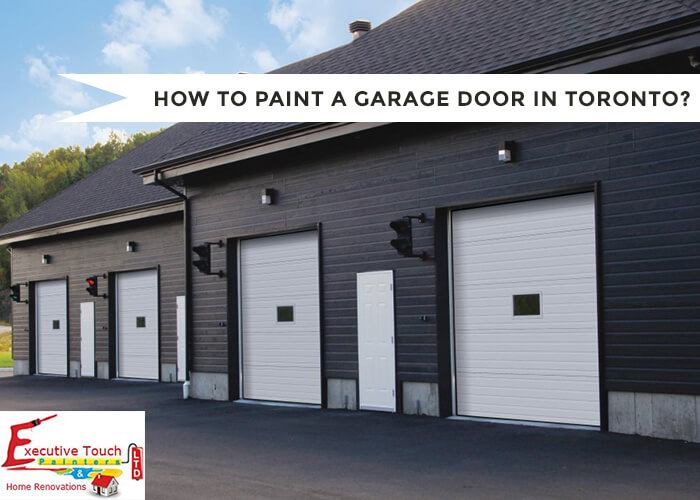
How to Paint a Garage Door in Toronto?

The garage is not only the place that protects your vehicles and other things from the harsh environmental elements, but it is also a prominent exterior for your house. Just as you take care of your interiors and exteriors, you should take care of the garage door and protect it from rusting and fading out. Garage door needs to be painted from time to time.

Materials Required for Painting :

  • Primer
  • Paint
  • Paint Roller
  • Paint Tray
  • Rags
  • Cleaning Solution
  • Painter’s Tape
  • Sandpaper for Cleaning
  • Cleaning Cloth

Steps For Painting Garage Door

1. Pick Up the Right Color :

The paint on the garage door should match exterior of your house. If you have an attached garage, blending the color of the garage door with the majority of your house color, would work correctly. Choose the color that blends well with the other exterior objects present outside the house like mail-box, porch floor or the shutters around the window. The paint should be selected based on the type of material the door is made of. The doors of the garage are generally made of wood, steel, fiberglass, and vinyl.

2. Cleaning and Preparation :

Before painting, be sure that there is no dirt or debris present on the surface of the garage door. If the door is metal, then it’s advisable to use abrasive scouring sponge for the cleaning. After the cleaning process is completed, seal the borders of the door by using painter’s tape, you can also seal the area of the door that you would not like to paint. To protect the driveways from the paint spill, put down tarp or damp cloth on the surface.

3. Apply the Primer :

Before applying the paint, coat the surface of the door with a primer. You can use the paint roller or brush for applying. It acts as an adhesive between the surface of the door and the paint color. If you avoid primer, then there is a chance that the paint gets peeled off in a matter of a few days. So select the primer based on the paint.

4. Applying the Paint :

Let the primer dry before the paint is applied. Get the paint ready in a paint tray and using a roller, apply the paint onto the surface of the garage door. You might not be able to paint the whole surface with the roller. The small patches that are left out can be filled by using a paintbrush. If you are in an idea of having a second coating, then apply the first coat vertically and the second coat should be applied horizontally. This creates a professional look to the surface.

5. Finishing :

Once the painting is completed, leave it to dry. Remove the painter’s tape attached to the surface of the door. You should remove it well before the paint is dried up, else the paint will peel off with the tape.

Some Tips Before Painting the Garage Door :
  • Be sure that the weather is clear before the process is started.
  • You can use a paint gun to paint the metal doors of a garage.
  • Start the paint job early in the morning, so that you have time in the evening.
  • Be sure that the surfaces are clean before and after applying the paint.

Painting Fiberglass Garage Door

Before painting the Fiberglass door, clean the door with a deck cleaner. Using sandpaper for cleaning may release fiber particles into the air. After the cleanup is completed, apply the primer and paint using roller and paint brush. Use at least two coatings of paint to get a smooth finish.

Painting Wooden Garage Door

The painting of a wooden garage door can be done quickly using a paint sprayer. Before painting, remove flaking, paint peelings, and bad wooden parts using a scraper. Apply caulk to the cracks present on the door. Fill the holes with wood filler where the rotten wood was removed. Sand the patched areas and apply the primer first and then paint using the sprayer. Multiple little coats can be coated on the wooden garage door to get a smooth finish.

Painting the Steel or Aluminium Garage Door

Ensure that the aluminum or steel garage door is clean before painting. The most efficient way to clean a metal door is through pressure washing on both sides. You need to see that all the dust, dirt and cobwebs are cleaned off the surface. Painting of metal door is the same as painting other garage doors. You need to follow a separate process to paint a galvanised steel garage door. Use long strokes to apply a single coat on the surface. Let the surface dry before applying the second coating. If you want an even coating for the door, you can apply the paint using a roller. You can try different patterns on the aluminum or steel garage doors using the paint brush.

Know more about the steps to paint an aluminum siding or garage door.

What Type Of Paint For Vinyl Garage Door?

The three factors to consider while painting a garage door are :
  • Type of Door
  • The Color you would like to paint
  • Size of the Garage Door

Type Of Paint:

Either oil-based or latex paint can paint most of the metal and wooden doors. But for vinyl doors, extra precautions are to be taken. Take the help of a professional to know the exact paint that will adhere to the surfaces of the vinyl doors. The type of primer you use should also comply with the kind of paint used. The color chosen for the garage door should blend with the exterior of the house.

The Cost to Paint Garage Door:

Cost for painting a garage exterior door vary with the size of the door, job quality, and the time of painting. The price is calculated based on the area to be painted. Additional fees are charged for typical designs done on the doors.

Conclusion

A well painted and good-looking garage door can improve your home’s curb appeal in a matter of a few hours. Painting this also protects from external elements like wind, rain, and sunlight thereby making your parking door rust proof. Hire our professional exterior painting services in Toronto to turn your garage door as your neighbor’s envy. Contact or Call (416)-410-0164 to get in touch with Executive Touch Painters in Toronto today.

Categories
Exterior Painting

How To Paint Vinyl Siding?

What is Vinyl Siding?

Vinyl Siding is a plastic siding that can be installed on the exterior of any house. Long strips of PVC are combined to form an outer shield for the house, and the cladding can be used for decoration purposes also. Vinyl Siding the most opts for exterior selections as it’s very economical and requires less maintenance.

Can You Paint Vinyl Siding?

In due time, the siding fades out or becomes worn out. When the siding fades out, the often concern of the homeowners is that “Can I paint the vinyl siding?“. Most of the people come to the conclusion that vinyl siding cannot be painted and thus go for changing the faded vinyl siding. However, Vinyl Sidings can be painted and can be repaired. Vinyl has the property of contracting and expanding depending on the temperature. So all types of paint will not go well with the vinyl siding. But Painting vinyl has its benefits and beautifies the exterior of your home.

Best Paint for Vinyl Siding

Vinyl expands and contracts when there are climatic changes, and this might create gaps at the seams. So the Paint to be used for vinyl siding is to be selected very carefully. Every type of vinyl is designed to absorb a certain amount of heat from the surroundings. So the light paint colors should be chosen for the sidings. If dark colors are selected, the heat absorbed would be more as dark colors would absorb more heat. This overheating causes the vinyl to warp or buckle.

Type of Paint to be Used

Now in the market, a wide range of vinyl-safe colors are also present to reduce the heat absorption of sidings. Many of these types of paints are a mix of urethane and acrylic resins. The combination of these paints gives more flexibility and excellent adhesion.

Painting Vinyl Siding

Applying paint to the vinyl siding improves the durability of the siding and also adds beauty to the exterior of your house. It is easy to paint the siding as it is effortless to clean and paint dries quickly. The other advantage is that the siding does not retain moisture.

4 Simple Steps to Paint your Vinyl Siding

Cleaning :

Before starting the actual painting process, you have to remove all the debris and dust present on the surface of the siding. Using a scrub or by power wash, you could clean the surface and remove all the dirt, mildew, chalking and other residues.

Priming :

The vinyl surface does not need priming but if the surface is degraded, pitted, porus and the original color is worn away, then you should use a primer. The primer makes the surface ready for the paint.

Paint Selection :

As said above, Use special exterior paints like latex for the vinyl sidings. The specific compounds in the paint have elastic property, and this helps the color to remain on the surface and withstand the contrast and expanding property of the vinyl siding. Other paints do not have this property and get cracks in no time.

Applying the Paint:

  • Use a roller or sprayer to apply the paint on the surface of the siding.
  • Apply the paint evenly on the surface. Be sure that the paint layer is not too thick.
  • The corners of the siding can be painted with a paintbrush.
  • After the first coating completely gets dried, apply the second coat.

Benefits of Painting Vinyl Siding

Conclusion

Painting vinyl siding is not a complicated task; you don’t need to be fear of doing it. But it requires few days, some professional tools and some labor to get the job done right.

If you think you don’t have much time and skills and want to take the help of professional exterior painters to paint your Toronto home, Contact Executive Touch Painters or Call at (416) 410-0164 to get a Free Estimate.

Categories
Exterior Painting

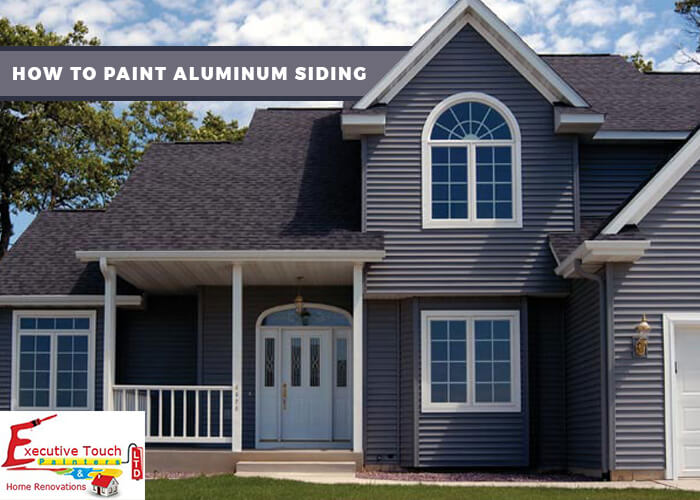
How To Paint Aluminum Siding?

Many homeowners in Toronto tend to remove the old aluminum sidings. Instead of replacing the old aluminum siding, it is more cost-efficient to repaint it. It is a simple process that can be completed in less time than you think. Often the question arises on how to paint the old Aluminium siding? In this article, we discuss the process in simple steps.

Steps to be Followed in Painting Aluminium Siding

Step 1: Repair the Damages

Repair all the damages that are present on the siding. Any sagging and separation, especially where the roof meets the wall, should also be inspected.

Step 2: Clean the Surface

Use sandpaper to scrub the surface of the siding. After using the sandpaper use a pressure or power washer to clean up the surface.

Step 3: Fill the Gaps or Holes with Caulk

Siding with holes will not be beautiful after painting. So be sure to fill all the gaps on the siding surface. Caulking is the best process to fill up the holes. Use a caulking solution to fill up the holes and cracks in the siding.

Step 4: Apply the Primer

Before going to the actual painting, first, apply the primer. The primer must be well paired with the paint that you are going to use on the siding. Always use two coats for that extra protection of the siding. Avoid using latex primer as it reacts with aluminum siding and fails to stick to the paint applied afterward.

Step 5: Apply the Paint

Depending on the paint you chose, the number of coatings can be changed. But always be sure that you have a minimum of two coats applied. Depending on the surface and your convenience you can use rollers or brushes. Spraying is also another technique used, but be sure that the climate is not too windy when using the sprayers for painting.

Step 6: Keep an Eye on the Climate

Do not go for painting if it’s too hot or raining. Always give a gap of one day after applying the primer to the siding. Give time for the primer to stick well to the surface.

Conclusion

Painting an Aluminum siding is more complicated than the painting surfaces of the wall and other surfaces, there are many real-world scenarios in Canada where homeowners attempted the job and tend to fail which leads to the loss of hard-earned money and valuable time. So, it is a wise decision to hire a professional to paint your exterior aluminum sidings rather than doing it yourself or removing the sidings to save you thousands of dollars. Contact Executive Touch Painters to get started or Call us at (416) 410-0164 for a Free Estimate today!

Categories
Exterior Painting

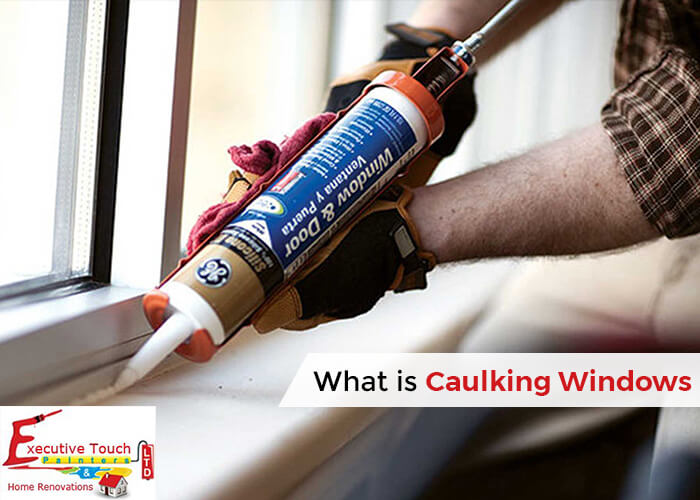
What is Caulking Windows

Window caulking is the process of sealing off cracks around a window with a waterproof sealant. Well-Done caulking protects your home from moisture intrusion, heat leakage and entry of insects and ants.

Benefits of Caulking are :

  • Reduces energy wastage
  • Cleaner home
  • Protection from water damages
  • Protection from outside insects and ants

A professional painter knows the fact that painting and caulking go hand in hand. Be sure to start the painting work after filling all the cracks and gaps.

Where can the Caulking be used?

Mostly used at door frames and windows, caulking can be used to seal the other parts in the exterior of your house. The most common areas are

When to Caulk :

Most of the homeowners do caulking in the winter season to avoid the loss of heat energy generated from the heaters. Caulking is also ideal for fall temperature conditions. If you are working on saving energy in winter, start the process before winter commences.

Types of Caulk :

Caulks are available in different varieties. The most preferred is the latex or silicone caulk. Latex is easy to remove, and silicon withstands extreme temperatures. If the homeowners tend to remove the caulk frequently, then latex is the best choice.

Apply Caulk :

Apply new caulk after removing the existing caulk. Another option is just filling the gaps that are present and leaving the present caulk as it is. Always use a caulk gun to apply the caulk. Caulk is applied in the gaps by holding the gun at 45-degree angle. You should be sure to cover all the gaps and areas where air can seep through.

Simple, Common Mistakes to Avoid in Caulking :

1. Not Selecting the right Caulk:

When it comes to selecting the caulk always go for the best one, you get the caulk quality for the amount of the money you invest. Right caulk is essential to keep your house safe for many months or years. Silicon caulk is one of the options, and when mixed with latex, will last over 20 years and are waterproof, flexible, shrink-proof. But the main drawback is that silicon caulk cannot be painted and releases strong odor after drying. Polyurethane caulk will last long, can be painted over and adheres well and is a standard option for exterior window caulking.

2. Not Removing the Old Caulk :

Caulk tends to harden as it ages, usually breaking away from its surface allowing moisture to accumulate beneath. Without removing old caulk, you have the risk of leaving damp on the surface of the window. Use a putty knife or sharp tool to remove it. To remove the extra caulk apply the caulk removing the gel, wait for two hours and remove the caulk easily.

3. Not Using the Right Applicator :

You’ll need a good quality caulking gun to apply caulk accurately. When shopping or a caulk gun, look for a model that has a comfortable grip and a smooth plunger rod. Inexpensive caulk guns tend to apply caulk unevenly and make the job messy.

4. Applying too much of Caulk :

Don’t be tempted to add more caulk on small and thin gaps. More caulk in the gaps will look odd and also effects the painting job.

5. Skipping Smoothing Process :

This critical step ensures your job looks neat and professional. Your hand is the best tool to use for smoothing. After applying a bead of caulk, run your finger along the bead to ensure it fills the gap. Dip your finger in soapy water to ensure that caulk does not stick to your skin. We can also use an ice cube to do the smoothing process.

Conclusion

Window Caulking is one of the simplistic and most candid ways to improve the energy efficiency of your home. To get the most efficient caulking for your home and windows contact our experts at Executive Touch Painters on 416-410-0164 or via online.

Categories
Exterior Painting

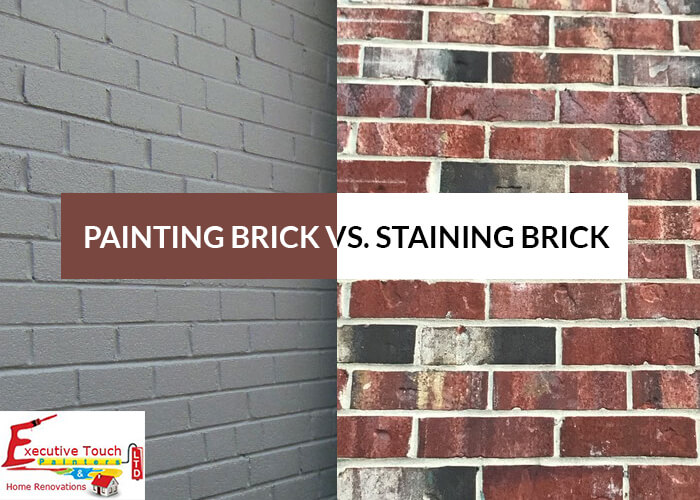
Painting Brick vs. Staining Brick

Updating the color of your brick boosts your home’s curb appeal. Not to mention, it can potentially increase resale value. When it comes time for your block revamp, you have the option of either brick painting or staining brick.

Painting of bricks is the most common task performed, and it’s effortless and can be done by yourself and also requires maintenance to keep up with the look and feel of the room. Expect to repaint it every 3-5 years due to the paint peeling from the surface of the brick. If the painting is not for the vast area, then brick painting is the best option.

If you would like to change the whole look of the room or area then staining is the best choice. In staining the brick absorbs the liquid and color is formed on the surface. The technique allows the blocks to breathe and also get protection from harmful chemicals and pollution from outside.

Main Differences Between Painting and Staining are

Painting requires maintenance, Staining is permanent :

Painting needs to be done for every three to five years; this is mainly due to the painting failures like efflorescence. The paint on brick also peels off after some years, giving the signs of re-painting. In staining, the stain is absorbed by the brick giving it a permanent color transformation and does not require any maintenance.

Painting traps moisture, Staining does not :

Paint forms a layer on the pores and does not allow moisture to come out, resulting in the formation of cracks and chipping. More water enters through these cracks and damages the bricks. Staining is done by silicate materials, intended to retain the physical properties of the blocks. The pores can release the moisture and prevent cracking of bricks. By releasing the humidity, the life of bricks increases.

Painting forms a thin film, staining is a chemical reaction :

As said above, painting creates a thin layer on the bricks, not allowing moisture to come out and damages them. In staining, a chemical reaction occurs between brick and stain solution, giving a permanent color to the brick, and allows for moisture release.

Paint is a flat finish, Staining creates the new look :

Paint creates a flat finish and causes the brick to lose its natural beauty. Paint just sits on the block by creating a thin layer. Staining, on the other hand, penetrates into the masonry and forms a permanent color. If you touch a brick after staining, you can feel the brick, but in painting, you cannot.

Why and why not to paint :

Painting allows to protect the surface of the brick and we can give you colors that are not available naturally. After applying paint to a block, you have to repaint it after three years. In the meantime, the paint may peel off, losing the beauty of the brick. Furthermore, because of the thickness, moisture may be present internally that could prevent the color from sticking. Also, after painting the humidity does not get released, making cracks to appear on the surface.

Why and Why not to stain :

Staining, on the other hand, is the best option. Staining forms a new and natural look to the surface of the brick. But some blocks cannot be stained; if no stain works on them, then painting is the only option available.

Cost of paint and staining :

Compared to color, the stain is costlier. But coming to maintenance, paint requires much more than stain. No experience is needed to paint the surface of bricks, but for staining professional is needed. The color range in staining is less than compared to the painting colors. This the main drawback of staining and positive in painting.

Staining your brick house will significantly boost the curb appeal of your property, but it requires extensive planning and preparation. Painting is a simple process and also increases the curb appeal, but only to some extent. The painting is lost after some years, but staining remains on the brick permanently. More colors are present in the paint, but in stain, there are color restrictions and cannot be used on all types of bricks.

Conclusion

Obviously, there are both negatives and positives in both painting and staining brick. If you are not able to decide the one to choose, our experts at Executive Touch Painters are ready to help you. Contact us online or Call us at 416-410-0164 for more details.

Categories
Exterior Painting

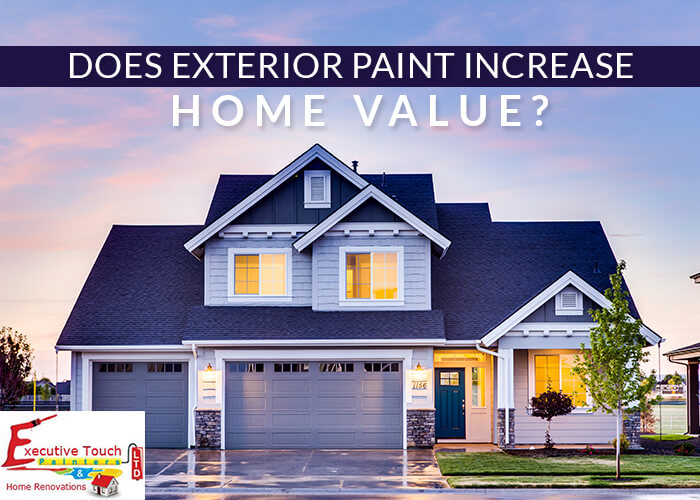
Does Exterior Paint Increase Home Value

As there is an overwhelming growth in residential real estate business, many homeowners who are listing their homes in the market expect a reasonable sales price. The question is now “Does exterior paint increase home value?” we say “yes,” A fresh coat of paint on your house improves the curb appeal and also an efficient use of color on the elevation of your home can add thousands of dollars to its value.

Advantages of Exterior Painting

According to some reports, good exterior painting increases the value of a home by 2-5 %. Take care while painting the exteriors of a house. Below are the main benefits of an exterior paint finish to your home.

  • Improves Curb appeal: Curb appeal is all about setting the right tone when a prospective buyer sees your exterior of your home for the first time.
  • The increase of lifespan: No matter which type of finish you have for your house, a fresh layer of exterior paint can help increase its lifespan.
  • Better Aesthetics: A fresh coat of paint can make your siding seem newer, putting your whole house in a different light.
  • Increased Protection against harsh elements of nature: Rain, wind, insects and other exterior factors can be a severe problem to an exterior of the house. Exterior paint job helps to protect the home from natural damages.
  • Objectively increased value of home: When a buyer comes to a house, a new or useful exterior paint will have an impact on the price of the house.
  • Buyers need not worry about re-painting the house after purchasing.
  • Right colors to the exteriors help the house to look bigger and appealing.
  • It is more reasonable to paint than the installation of the new vinyl cladding.

Tips for Your Exterior Painting Project

You need to take a lot of care while painting the exteriors of your home because it creates the first impression on the prospective buyers of your residential property.

Follow these few tips for exterior painting project to be a success.

  • Freshen up the exterior by giving striking colors to the window frames, railings, and other accents.
  • Select neutral, white and cream colors which appeal to most of the persons.
  • Paint vinyl siding the same shade or lighter to prevent the material from warping because of heat.
  • Make sure that the exterior paint compliments the other materials of home like bricks, stone, and roof.
  • Paint window sashes and hanging surfaces, such as porch ceilings, lighter shade to reflect light.
  • Try to use mostly warm colors than cool colors.
  • Paint the window slashes and overhead surfaces with light colors to lift the spirit of the house.

Conclusion

For any house exterior painting is very important. Also, you need to face many challenges at this time. So don’t wait to give our professional painters at Executive Touch the opportunity to improve your homes curb appeal. Call us at (416) 410-0164 for a Free Estimate Now.